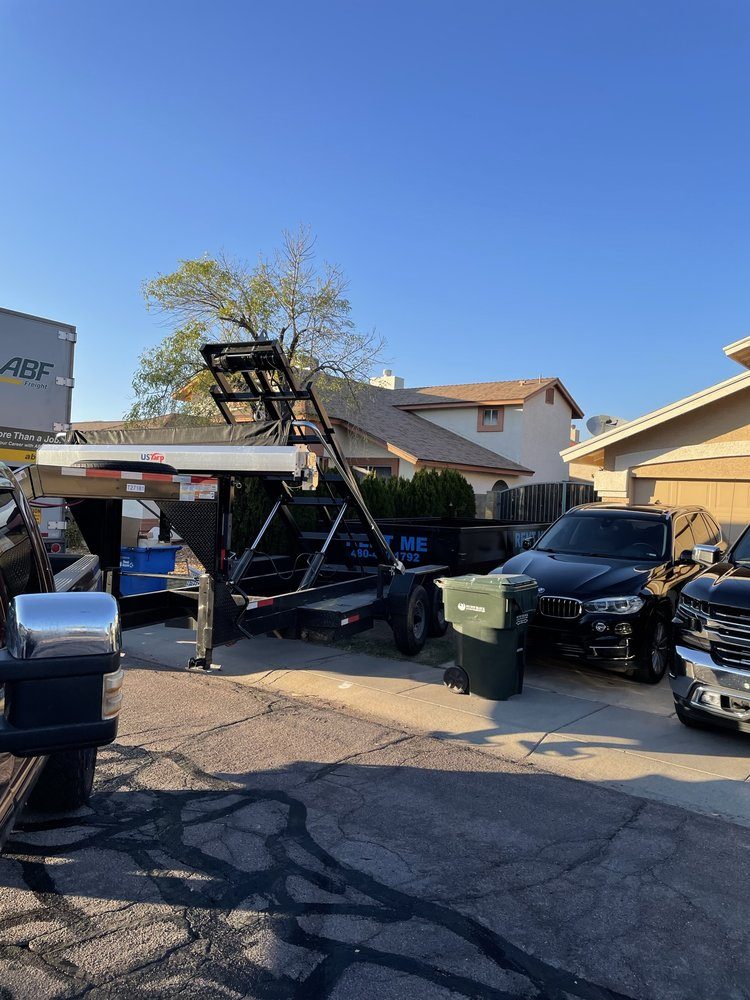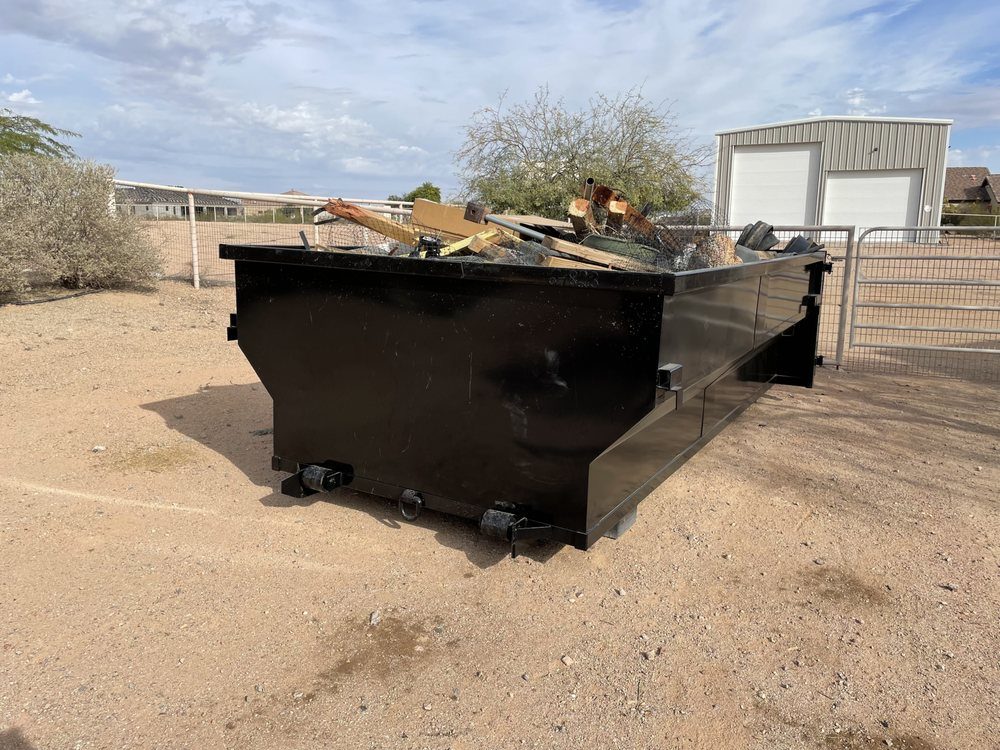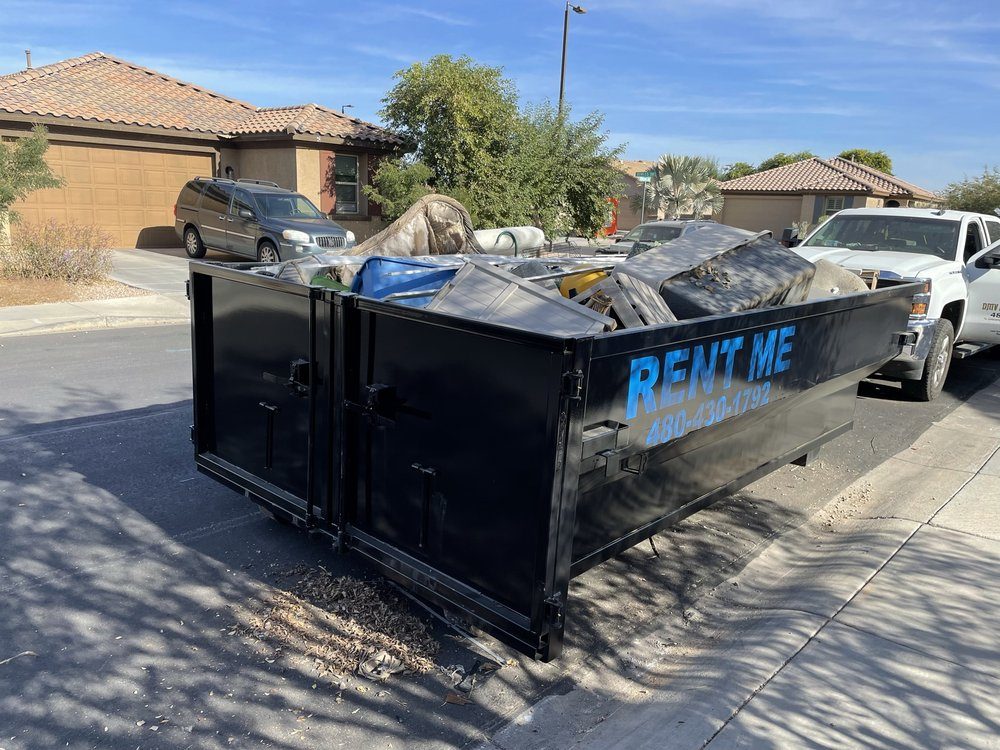
The quickest way to avoid surprise fees is to know what belongs in the dumpster before you fill it. The exact rules depend on the disposal facility, so always confirm anything unusual with us first, but this is the general picture.
Usually fine
- Household junk and furniture
- Remodeling debris such as drywall, lumber, cabinets and flooring
- Yard waste and branches
- Roofing shingles (tell us so we can plan the weight)
- Most appliances (ask us about those with refrigerant)
Usually not allowed
- Paint, solvents, stains and other chemicals
- Batteries and fluorescent bulbs
- Tires
- Medical or hazardous waste
- Propane tanks and other pressurized containers
These items can harm people or equipment, and facilities charge extra or refuse them. Most can be taken to a local household hazardous waste drop-off.
Heavy material needs a heads-up
Concrete, brick, dirt and stone are heavy. They are often handled separately from regular trash and have to stay within the container’s weight limit. If your project involves them, say so when you book.
Do not overfill
Keep the load level with the top of the dumpster. Material sticking up above the sides cannot be hauled safely.
Metal is worth separating
If you have scrap metal, keep it in its own pile. We offer discounted rates when what you throw out can be recycled. Read more about scrap metal recycling.